Sanahin Monastery Armenia stands as one of the most significant medieval religious complexes in the Lori Province. Built during the 10th century, this historic site served as a vital center of learning, calligraphy, and religious administration. Today, it holds UNESCO World Heritage status alongside nearby Haghpat Monastery.
To experience these historic halls with an expert local guide and hassle-free transport, consider joining one of our small group tours in Armenia.
This detailed guide provides everything you need to know about Sanahin Monastery Armenia, including its origin story, architectural layout, artistic details, and practical visitor information.
The Rich History of Sanahin Monastery Armenia
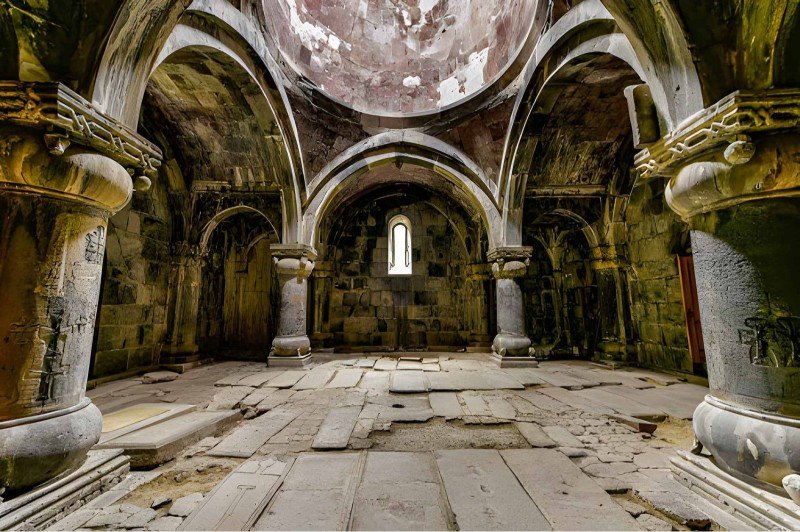
Queen Khosrovanuysh, wife of King Ashot III the Merciful, founded the main church of Sanahin Monastery Armenia in 966 AD. The name “Sanahin” translates in Armenian to “this one is older than that one.” This name directly references its neighboring complex, Haghpat Monastery, located just across the canyon.
During the Kiurikian kingdom in the late 10th and 11th centuries, the site grew into a thriving intellectual hub. The complex hosted over 500 scholars, priests, and artists at its peak. Scholars taught humanities, medicine, painting, and philosophy inside its halls.
However, invading forces periodically damaged the structures over the centuries. Seljuk Turks attacked the region in 1105, followed by heavy Mongol incursions in the 13th century. Earthquakes also struck the area, causing structural damage.
Despite these hardships, local noble families and church leaders regularly restored the complex. Their dedication preserved the original architectural style and structural integrity for future generations.
Essential Architectural Highlights to Explore
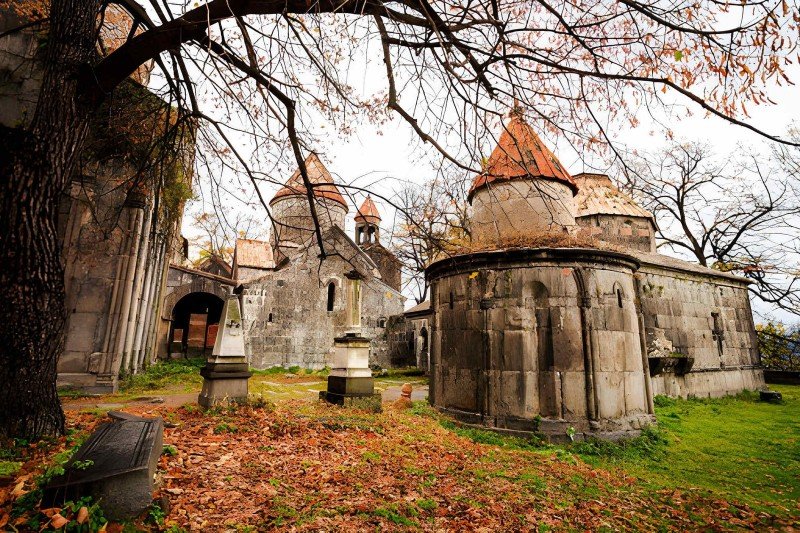
The complex features several interconnected stone structures. Builders placed these facilities close together, creating a unified and protected layout.
St. Amenaprkich (Cathedral of the Redeemer)
This structure is the largest building in the complex. Queen Khosrovanuysh commissioned the cathedral to honor her sons, Smbat and Gurgen. High relief carvings on the upper eastern facade depict the two princes holding a small model of the church. This sculpture is one of the earliest examples of donor portraits in Armenian religious art.
St. Astvatsatsin (Church of the Holy Mother of God)
Built between 928 and 944 AD, St. Astvatsatsin is the oldest church on the grounds. It stands directly adjacent to the main cathedral. Its interior remains intentionally dark, simple, and solemn, reflecting the style of early medieval Armenian architecture.
The Academy of Grigor Magistros
Constructed between the two main churches, this vaulted hall served as the central university space. Named after the famous 11th-century scholar Grigor Magistros Pahlavuni, the hall features large stone niches built into the side walls. Scholars and students sat in these alcoves during lectures and group discussions.
The Scriptorium and Library
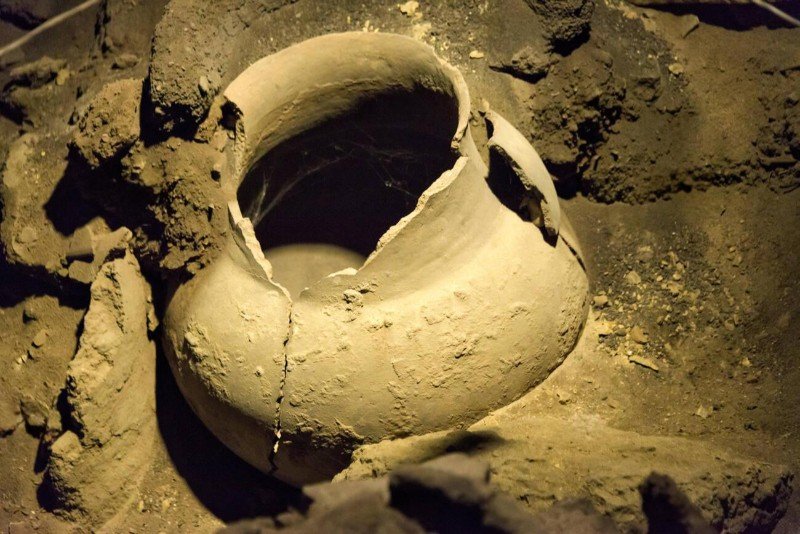
Built in 1063 by Princess Hranush, the scriptorium housed valuable religious and historical manuscripts. It features a unique square plan with diagonal arches that support a octagonal central dome. Round stone niches carved into the floor once held clay vessels containing fragile parchment books and documents.
The Gavit (Narthex)
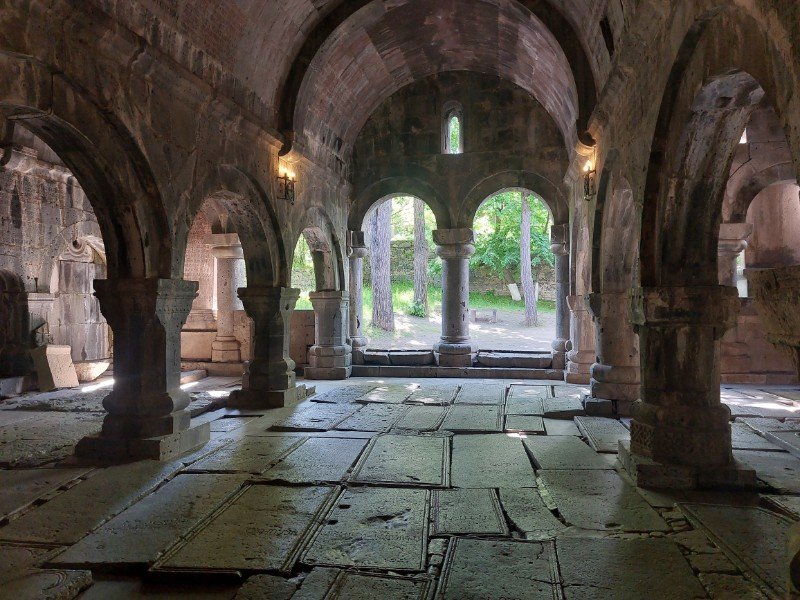
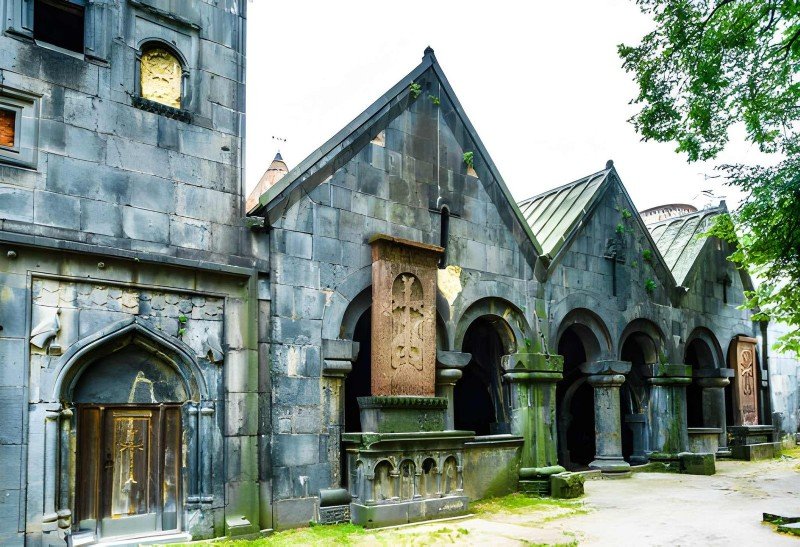
The large vaulted vestibule attached to St. Amenaprkich served multiple functions. It acted as an entry space, a assembly hall for community discussions, and a burial ground. The stone floor features numerous gravestones belonging to prominent regional families, including the Zakarian princes.
The Bell Tower
Standing slightly detached from the main cluster, the three-story bell tower dates back to the mid-13th century. It features fine stone carving, arched openings on the top floor, and a red tufa cross mounted on its stone roof.
Intricate Carvings and Khachkars
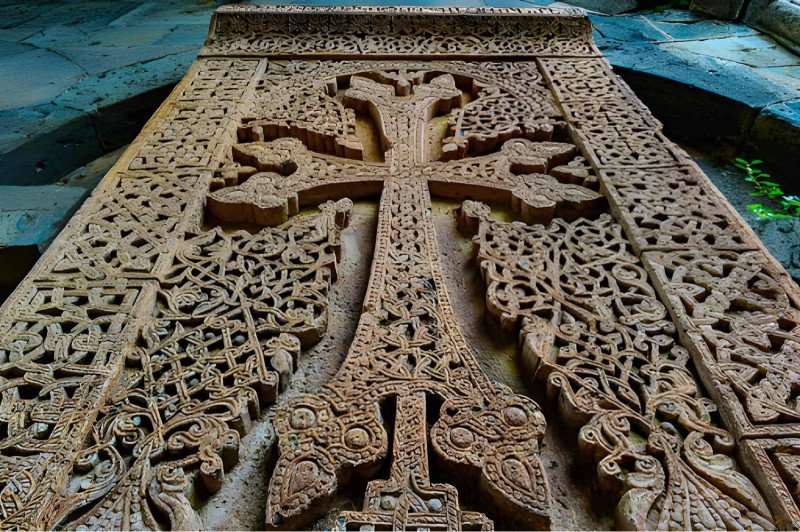
Beyond its main halls, Sanahin Monastery Armenia displays exceptional stone carving artistry. Dozens of medieval khachkars (Armenian cross-stones) stand throughout the courtyard and along inner walls.
The most famous memorial stone on site is the Grigor Tuteordi Khachkar, carved in 1184. Created by the master craftsman Mkhitar, this stone features incredibly detailed lace-like patterns cut deep into basalt stone. It stands near the north wall of St. Astvatsatsin and remains a masterpiece of medieval Armenian sculpture.
How to Get to Sanahin Monastery Armenia
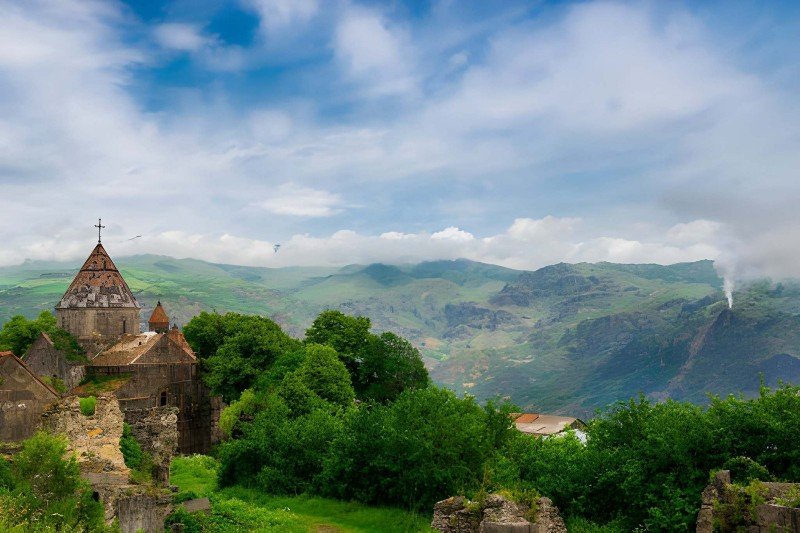
The monastery sits on a high green plateau above the industrial town of Alaverdi in northern Armenia. You can reach the location using several transport options.
By Car
Driving from Yerevan takes about three to three and a half hours via the M3 highway. The total distance measures roughly 170 kilometers. The route takes you through Vanadzor and down into the picturesque Debed River Canyon before winding up the plateau roads.
By Public Transport (Minibus / Marshrutka)
- Board a regional minibus from Yerevan’s Northern Bus Station heading directly toward Alaverdi.
- Once you arrive in Alaverdi, transfer to a local city minibus or hire a local taxi for the short climb up to the Sanahin plateau.
- You can also hire a private driver in Vanadzor for direct transport to the site entrance.
By Organized Tour
Many tour operators in Yerevan offer full-day guided trips. These itineraries usually bundle Sanahin Monastery Armenia together with Haghpat Monastery, Akhtala Fortress, and the historic Sanahin Bridge.
For the best travel experience without headaches, join our Armenia tours to enjoy comfortable transport and expert local guidance directly to the site.
Practical Travel Tips for Visitors
Proper planning ensures a smooth and memorable visit to the complex. Keep these practical recommendations in mind before you travel:
- Entry Fee: Admission to the complex is completely free for all visitors.
- Opening Hours: The grounds remain accessible daily from 9:00 AM until 6:00 PM.
- Best Season to Visit: Late spring through autumn (May to October) offers pleasant temperatures, clear road conditions, and lush foliage in the canyon.
- Appropriate Footwear: Wear sturdy walking shoes. The ancient stone floors, pathways, and gavits are uneven and can become slippery after rain.
- Camera Advice: Interior spaces rely on natural light entering through small windows, so adjust your low-light camera settings. Always maintain full respect for worshippers using the space.
- Combine Nearby Sights: Plan at least two hours for Sanahin, then cross the canyon to tour Haghpat Monastery. Do not miss the 12th-century stone Sanahin Bridge located down in Alaverdi.
Conclusion
Sanahin Monastery Armenia represents a high point of medieval Armenian culture, higher learning, and master stone architecture. From its quiet scriptorium and ancient university hall to its grand gavits, every corner reveals centuries of history and survival. Whether you are a dedicated history enthusiast or a traveler exploring the northern mountains, visiting this UNESCO landmark offers an extraordinary look into Armenia’s rich cultural heritage.
FAQ
Is Sanahin Monastery Armenia a UNESCO World Heritage Site
Yes. UNESCO designated Sanahin Monastery alongside nearby Haghpat Monastery as a World Heritage Site in 1996, recognizing its exceptional medieval ecclesiastical architecture.
How far is Sanahin Monastery from Yerevan
The distance between Yerevan and Sanahin Monastery Armenia is approximately 170 kilometers (105 miles). Driving takes around 3 to 3.5 hours each way.
How much time should I spend at the monastery
Most visitors spend between 1.5 and 2.5 hours exploring the main churches, the academy hall, the scriptorium, the bell tower, and the surrounding grounds.