The Areni-1 Cave UNESCO nomination marks an important new chapter in Armenia’s cultural heritage. In 2026, Areni-1 Cave joined Armenia’s UNESCO World Heritage Tentative List, recognizing its exceptional archaeological importance and its connection to the early history of winemaking.
Located in the Arpa River gorge in Vayots Dzor, southern Armenia, the cave preserves evidence of human activity dating back more than six millennia. Its discoveries include the world’s earliest known winery, the oldest preserved leather shoe in Eurasia, ritual remains, ancient food remains, tools, textiles, and other organic materials.
The UNESCO submission presents Areni-1 as a remarkable record of prehistoric life, technology, ritual practices, and human interaction with the landscape.
Want to experience Areni-1 Cave in person? Join our Armenia tours and discover the ancient heritage, wine traditions, and spectacular landscapes of Vayots Dzor.
Follow our article to learn more about Areni-1 Cave, its UNESCO nomination, ancient winery, and remarkable archaeological discoveries.
Areni-1 Cave and the UNESCO Tentative List
UNESCO officially lists the site as “Areni-1 (Birds’) Cave: Prehistoric Life and Winemaking in the Arpa River Gorge.” Armenia submitted the nomination on March 6, 2026, under cultural criteria (iii), (iv), and (v).
The addition took place during the 48th session of the World Heritage Committee, held in Busan, Republic of Korea, from July 19 to July 29, 2026.
A place on the UNESCO Tentative List does not mean that Areni-1 is already a UNESCO World Heritage Site. Instead, the Tentative List represents an important stage in the World Heritage process and identifies properties that a country may consider for future nomination.
Armenia now has eight properties on its UNESCO World Heritage Tentative List, according to the UNESCO World Heritage Centre.
For Armenia, the Areni-1 nomination also strengthens international recognition of the country’s prehistoric heritage and its long association with grape cultivation and winemaking.
Where Is Areni-1 Cave
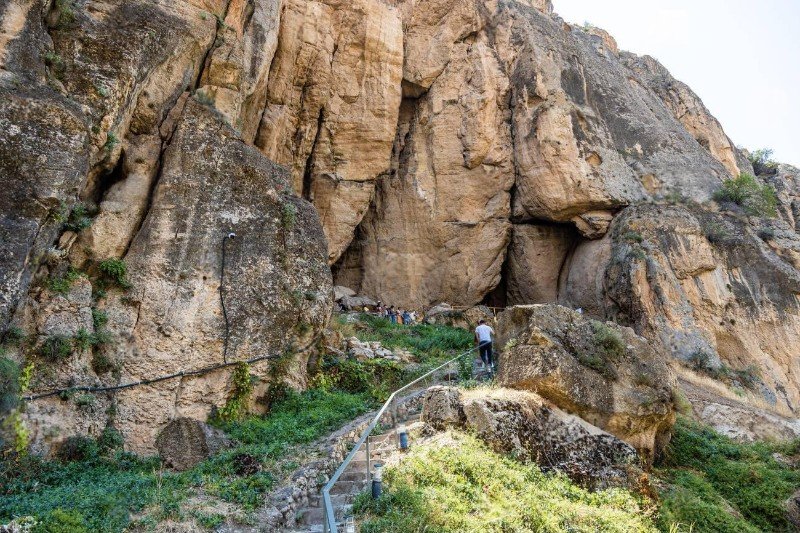
Areni-1 Cave is located in Vayots Dzor Province, near the village of Areni. The cave lies within the limestone cliffs of the Arpa River gorge, an area known for vineyards, orchards, dramatic rock formations, and ancient settlements.
The location sits between the Ararat Depression and the Syunik Uplands. Fertile land along the Arpa River has supported agriculture for thousands of years.
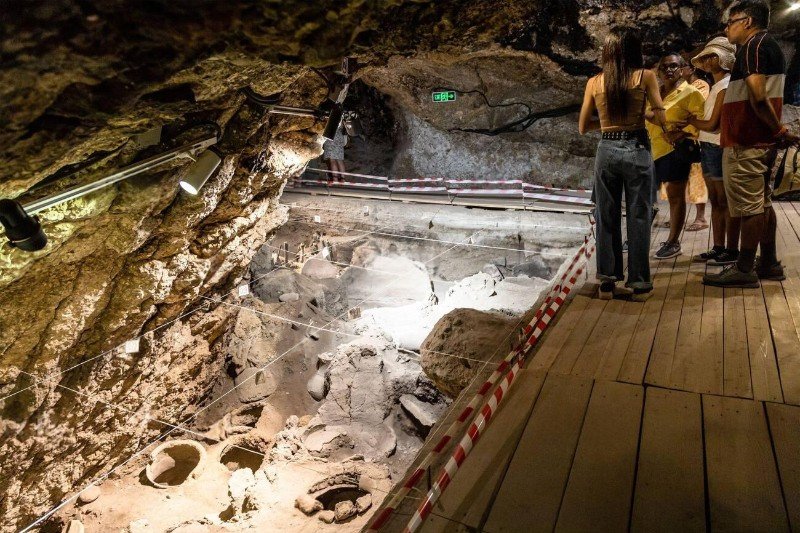
The cave itself forms a multi-chamber karst system. Three principal galleries extend more than 40 meters into the limestone cliff. The total interior area covers approximately 850 square meters, while the wider cave system and adjacent terrace exceed 7,800 square meters.
The cave’s dry and stable microclimate created exceptional conditions for preserving organic materials. Wood, leather, rope, textiles, seeds, plant remains, and food residues survived for thousands of years.
Researchers have also documented nearly 40 caves with prehistoric traces within the wider Arpa gorge. Areni-1 stands among the largest and most intensively occupied sites in this archaeological landscape.
The Archaeological History of Areni-1 Cave
Researchers first recognized the archaeological importance of Areni-1 Cave in 1997, when archaeologist Boris Gasparyan recovered obsidian and bone tools from the rear gallery.
Further investigations followed in 2004. Systematic excavations began in 2007 through cooperation between Armenian and international research institutions.
Excavation seasons from 2007 to 2014, followed by further work in 2023, produced discoveries that attracted international attention. These discoveries included the ancient winery, leather footwear, ritual deposits, food remains, tools, and many other artefacts.
The archaeological record shows that people used the cave for a very long period. The deepest cultural layer dates to approximately 6400–6200 BC, while the most intensive occupation occurred during the Late Chalcolithic period, approximately 4500–3500 BC.
Later layers provide evidence of Early Bronze Age, Middle Bronze Age, Early Iron Age, and medieval activity. Medieval occupation continued from approximately the 4th to the 18th centuries AD.
This long sequence makes Areni-1 particularly valuable for understanding cultural changes in Armenia and the wider South Caucasus.
Areni-1 Cave and the World’s Earliest Known Winery
Perhaps the most famous discovery at Areni-1 is its ancient winemaking installation.
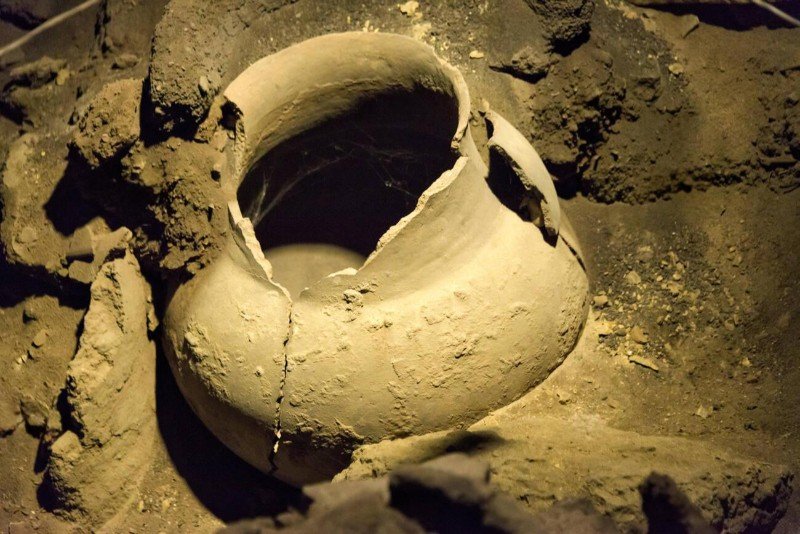
Archaeologists found a clay platform associated with a buried vessel, fermentation containers, and large storage jars known as karases. Grape pips, skins, and stems appeared within the archaeological deposits.
Scientific analysis identified tartaric acid and malvidin, chemical indicators associated with grape wine. Radiocarbon dating places the installation at approximately 4000 BC.
The significance goes beyond finding traces of ancient wine.
Areni-1 provides evidence of an organized winemaking process. The archaeological remains include areas for pressing grapes, fermentation, and storage within a clearly defined production setting.
This makes the site particularly important for research into the origins of viniculture and ancient wine production.
Other prehistoric sites in the wider region have produced evidence that may relate to early grape use or fermented beverages. However, Areni-1 provides a particularly complete archaeological setting for organized wine production.
That distinction gives Areni-1 an important place in the study of the early history of wine.
The Oldest Preserved Leather Shoe in Eurasia

The winery is not the only remarkable discovery from Areni-1.
Archaeologists also found a remarkably well-preserved leather shoe. The shoe measures approximately 24.5 centimeters and was made from a single piece of cowhide.
Researchers dated it to approximately 3627–3377 BC. Its exceptional preservation resulted from the cave’s dry and stable conditions.
The shoe provides direct evidence of prehistoric craftsmanship, clothing, and everyday life. It also demonstrates why the cave’s natural environment has such archaeological importance.
Without the unusual preservation conditions inside Areni-1, many organic objects from this period would have disappeared thousands of years ago.
What Else Has Been Found Inside Areni-1 Cave
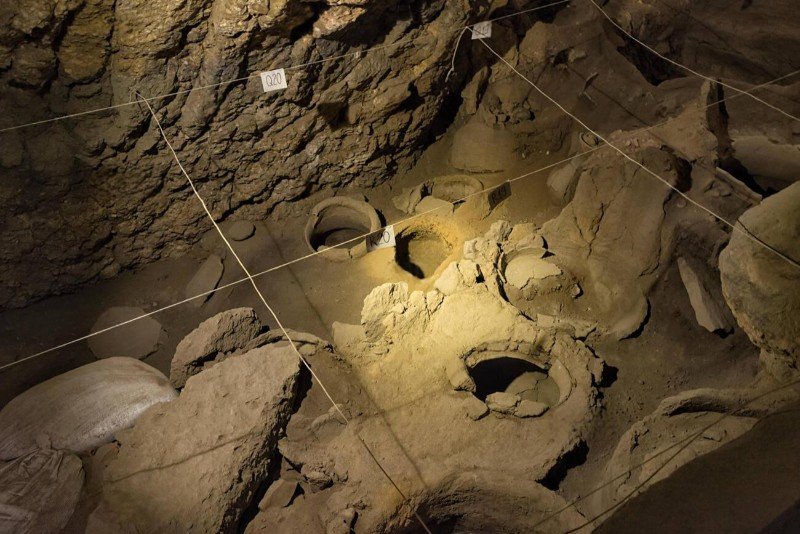
The archaeological record at Areni-1 extends far beyond wine and footwear.
Researchers found evidence of food preparation, agriculture, herding, storage, and craft production. Hearths, storage facilities, obsidian and chert tools, cereals, and animal remains provide evidence of everyday activities.
Charred barley and wheat indicate early agricultural practices. Goat bones point to small-scale herding.
The cave also contains evidence of ritual and mortuary practices. Archaeologists recovered ceramic vessels containing human skulls, including those of children and adolescents. Animal remains and other offerings accompanied some of these deposits.
These discoveries provide valuable information about the beliefs and symbolic practices of Chalcolithic communities.
The cave also preserved wooden objects, ropes, basketry, textiles, leather, seeds, cereals, fruits, and other plant remains. Together, these materials provide an unusually detailed picture of prehistoric life.
Why Is Areni-1 Important for UNESC
The UNESCO nomination identifies three criteria for the proposed cultural heritage value of Areni-1.
A Rare Record of Prehistoric Life
Areni-1 preserves evidence of habitation, food production, craft activity, ritual practices, and technological innovation within the same archaeological complex.
This combination gives researchers an unusually detailed view of life during the Late Chalcolithic period.
Evidence of Early Technological Innovation
The ancient winery represents one of the strongest reasons for the site’s international significance.
The combination of a grape-processing area, fermentation vessels, storage jars, grape remains, and scientific evidence of wine provides a coherent picture of early organized winemaking.
A Long Relationship Between People and the Landscape
Areni-1 also demonstrates a long relationship between people, agriculture, and the Arpa River valley.
The surrounding region remains closely associated with grape cultivation and Armenian winemaking today. This connection between archaeological evidence and living traditions adds another important dimension to the site’s cultural significance.
What Does UNESCO Recognition Mean for Areni-1
Being included on the UNESCO World Heritage Tentative List does not yet make Areni-1 a World Heritage Site.
The Tentative List is an important step in the World Heritage process. It identifies properties that may receive a full World Heritage nomination in the future.
UNESCO’s current listing identifies Areni-1 as a cultural property in Vayots Dzor, Armenia, with proposed criteria (iii), (iv), and (v).
For travelers, the new status also brings greater international attention to one of Armenia’s most significant archaeological sites.
It highlights not only the cave itself, but also the wider cultural landscape of Areni and Vayots Dzor.
Visiting Areni-1 Cave in Armenia

Areni-1 Cave is located in one of the most interesting travel regions in southern Armenia. Visitors to Vayots Dzor can combine the cave with other attractions in the area.
The village of Areni is famous for its vineyards and wine traditions. Nearby attractions include Noravank Monastery, dramatic landscapes along the Arpa gorge, and other historical sites.
A visit to Areni-1 can therefore become part of a wider journey through Armenia’s archaeological, religious, and wine heritage.
For travelers interested in ancient history, archaeology, and Armenian wine culture, the site offers an especially meaningful experience.
Areni-1 Cave UNESCO: A New Chapter for Armenian Heritage
The addition of Areni-1 Cave to UNESCO’s World Heritage Tentative List recognizes the extraordinary archaeological record preserved inside this Armenian cave.
The ancient winery connects the site with the early history of wine. Its leather shoe provides evidence of prehistoric craftsmanship. Also its ritual deposits offer insight into ancient beliefs. Its preserved organic materials reveal details of daily life that rarely survive at archaeological sites.
At the same time, the cave forms part of a living cultural landscape where grape cultivation and winemaking remain important today.
Areni-1 is therefore more than an archaeological site. It represents a long record of human creativity, adaptation, technology, agriculture, and cultural tradition in Armenia.
Its new place on the UNESCO Tentative List gives this remarkable site greater international visibility and may represent an important step toward future World Heritage recognition.
Conclusion
The story of Areni-1 Cave UNESCO brings together some of Armenia’s most remarkable archaeological discoveries. The cave preserves direct evidence of ancient winemaking, prehistoric craftsmanship, agriculture, ritual practices, and everyday life.
Its addition to the UNESCO World Heritage Tentative List in 2026 places Areni-1 among Armenia’s important heritage properties being considered for future international recognition.
For anyone interested in the origins of wine, prehistoric archaeology, or Armenia’s ancient cultural heritage, Areni-1 Cave deserves a prominent place on the country’s historical map.
Ready to discover Areni-1 Cave and the ancient heritage of Armenia? Explore our Armenia Small Group Tours and start planning your journey.
FAQ
Is Areni-1 Cave a UNESCO World Heritage Site
Not yet. Areni-1 Cave is currently on UNESCO's World Heritage Tentative List, following Armenia's submission on March 6, 2026. Being on the Tentative List is a step toward possible future World Heritage nomination.
Why is Areni-1 Cave important
Areni-1 Cave preserves exceptional evidence of prehistoric life. Its most famous discovery is an ancient winemaking installation dating to approximately 4000 BC. Archaeologists also found a remarkably preserved leather shoe, ritual deposits, agricultural remains, tools, textiles, and other organic materials.
Where is Areni-1 Cave located
Areni-1 Cave is in Vayots Dzor Province in southern Armenia, within the limestone cliffs of the Arpa River gorge near Areni village. The area is also famous for vineyards, Armenian wine production, and important historical monuments.