Ancient Armenian Fortresses stand as powerful symbols of Armenia’s long and complex history. These stone structures protected kingdoms, guarded trade routes, and controlled mountain passes for centuries. Even today, they continue to attract travelers, historians, and photographers who want to understand Armenia’s past.
Across the country, fortresses rise above valleys, rivers, and rugged landscapes. Many date back to the early kingdoms of Armenia, while others come from the medieval period when regional princes strengthened defense systems across the region.
This guide introduces five important ancient Armenian fortresses that reveal the strategic and cultural importance of fortified architecture in Armenia: Erebuni, Amberd, Smbataberd, Lori Fortress, and Kakavaberd. Each site offers a different story about Armenia’s defense, power, and resilience.
You can also join one of our small group adventures in Armenia to experience these historic sites with expert guidance and deeper cultural insight.
Why Ancient Armenian Fortresses Are Important

Throughout history, Armenia stood at the crossroads of powerful empires. As a result, rulers built many defensive structures to protect cities and territories.
Ancient Armenian fortresses served several critical functions:
- Protecting major settlements and capitals
- Guarding trade routes that crossed the region
- Monitoring mountain passes and river valleys
- Acting as military headquarters during conflicts
These structures also reflect the engineering skills of ancient builders. Thick stone walls, watchtowers, and elevated positions allowed soldiers to control large areas of land.
Today, many of these sites remain partially preserved and continue to draw visitors interested in Armenia’s historical landmarks.
1. Erebuni Fortress

Erebuni Fortress holds a special place in Armenian history. King Argishti I of Urartu founded the fortress in 782 BCE, making it one of the oldest known structures connected to the foundation of modern Yerevan.
The fortress served as an administrative and military center of the Urartian Kingdom. From its hilltop position, leaders controlled the Ararat Valley and protected important agricultural lands.
Key Features
- Large stone defensive walls
- Royal palace complex
- Temples dedicated to Urartian gods
- Storage areas for wine and grain
Archaeological excavations revealed inscriptions carved into basalt stones. These inscriptions confirm the exact founding date of the fortress.
Today, visitors can walk through the ruins and visit the nearby Erebuni Museum, which displays artifacts from the Urartian period.
Because of its historical importance, Erebuni remains one of the most significant ancient Armenian fortresses.
2. Amberd Fortress
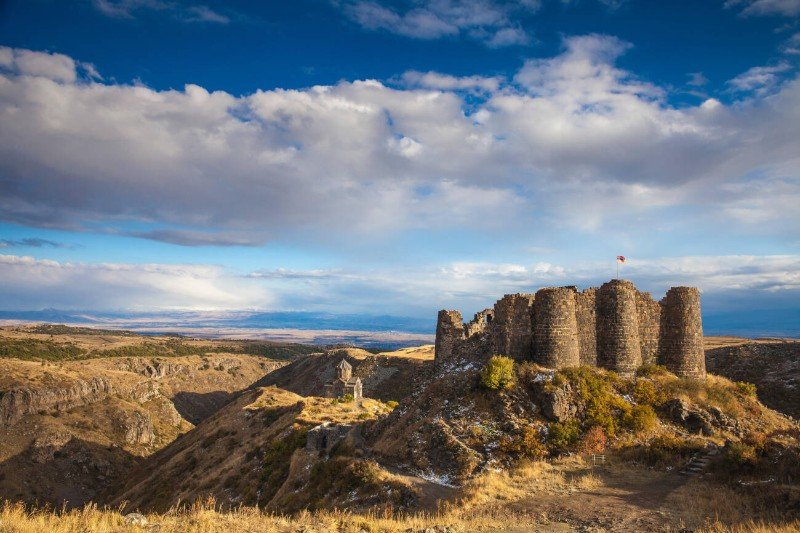
Located on the slopes of Mount Aragats, Amberd Fortress stands at an elevation of about 2300 meters above sea level. Its position allowed rulers to control the surrounding valleys and protect northern routes into the region.
The fortress likely originated in the 7th century, although the Bagratuni dynasty expanded it during the 10th century.
Strategic Importance
Amberd’s location between two rivers created a natural defensive barrier. As a result, attackers faced great difficulty approaching the walls.
Key structures inside the complex include:
- Thick basalt defensive walls
- Watchtowers and fortified gates
- A bathhouse with heating system
- Vahramashen Church, built in 1026
The fortress remained active until the Mongol invasions of 1236, which caused major destruction across the region.
Today, Amberd is one of the most visited historical fortresses in Armenia due to its dramatic setting and relatively well-preserved ruins.
3. Smbataberd Fortress
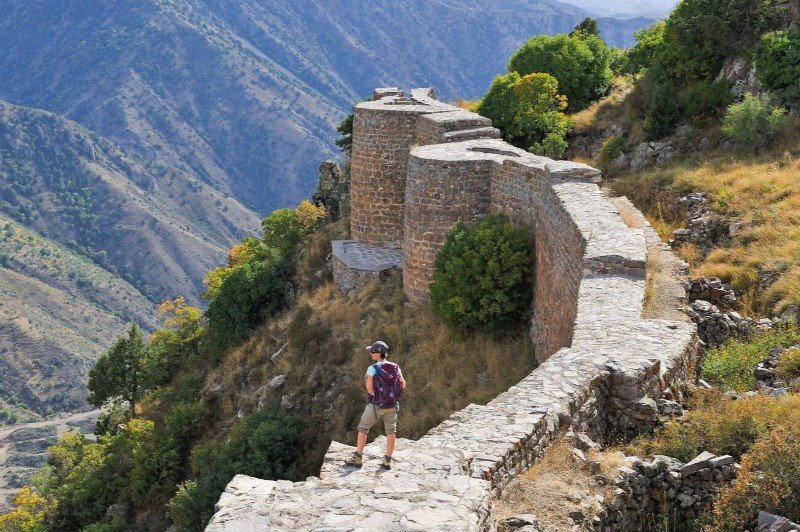
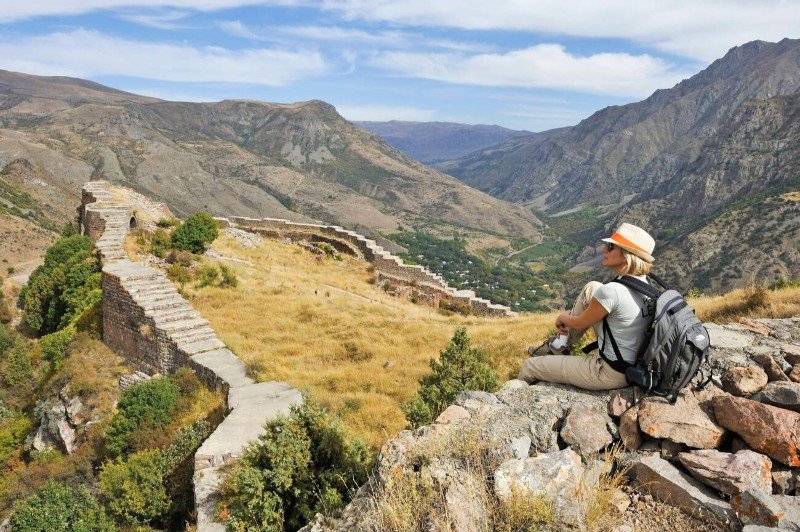
Smbataberd Fortress rises above the valley near the villages of Artabuynk and Yeghegis in Vayots Dzor Province. Its high walls stretch across the mountain ridge, creating a strong defensive position.
Historians believe the fortress dates to the 9th or 10th century and played an important role in protecting the Syunik region.
Defensive Strength
Smbataberd gained a reputation as one of the strongest medieval fortresses in Armenia. Several features made it extremely difficult to capture:
- Massive stone walls along steep cliffs
- Limited entry points
- Long-distance visibility across the valley
Historical accounts describe how invading armies struggled to break through its defenses. According to local tradition, a secret water supply once helped defenders survive long sieges.
Although parts of the fortress collapsed over time, the remaining walls still show the impressive scale of medieval Armenian military architecture.
4. Lori Fortress
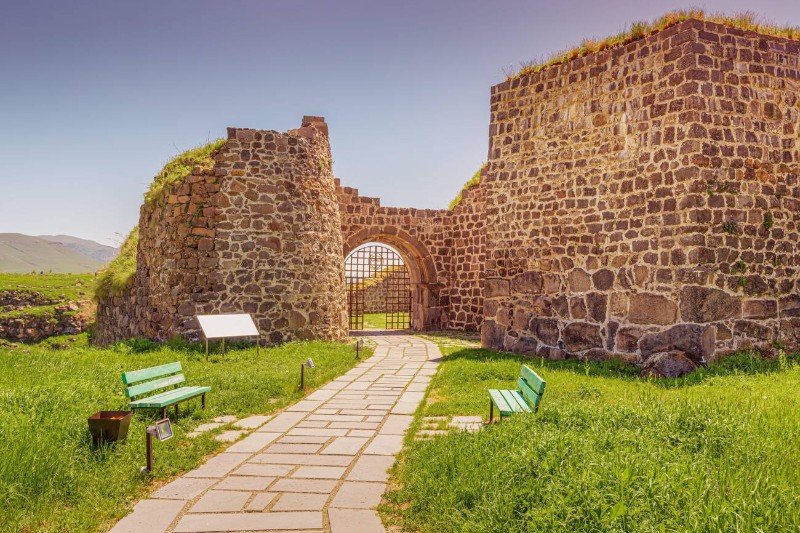
Lori Fortress served as the capital of the Kingdom of Lori during the medieval period. King David I Anhoghin founded the fortress city in 1065.
The fortress occupied a plateau surrounded by deep gorges, which created a natural defensive system.
A Medieval Fortress City
Unlike many Armenian fortresses, Lori functioned as a large urban center rather than only a military stronghold.
At its peak, the fortress contained:
- Residential quarters
- Religious buildings
- Administrative structures
- Defensive towers and gates
Stone walls extended nearly 200 meters across key sections of the plateau.
In 1238, Mongol forces captured the city and caused heavy damage. Despite this destruction, many ruins remain visible today.
Because of its historical role as a royal capital, Lori Fortress remains one of the most important medieval Armenian fortifications.
5. Kakavaberd Fortress
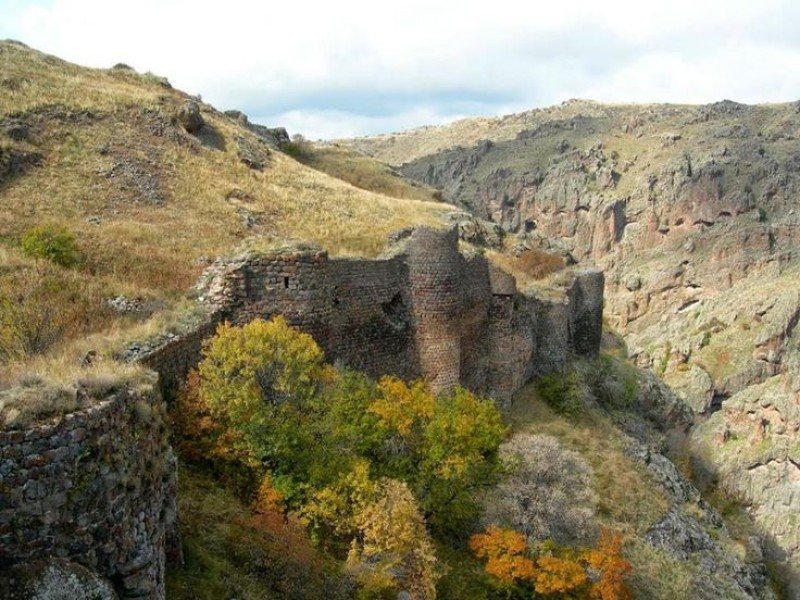
Kakavaberd Fortress stands within the mountains of the Khosrov Forest State Reserve, one of Armenia’s oldest protected areas.
Historical records mention the fortress as early as the 9th century. Medieval Armenian historian Hovhannes Draskhanakerttsi referred to it in his writings.
Natural Protection
Kakavaberd’s location made it extremely secure. Steep cliffs surround most sides of the fortress, leaving only a narrow approach route.
The fortress includes:
- Defensive stone walls
- Watchtowers overlooking the valley
- Interior structures built with large basalt blocks
During the 12th and 13th centuries, the fortress came under the control of the Proshyan noble family, who ruled parts of central Armenia.
Today, Kakavaberd attracts hikers and history enthusiasts because of its remote setting and dramatic landscape.
Tips for Visiting Ancient Armenian Fortresses
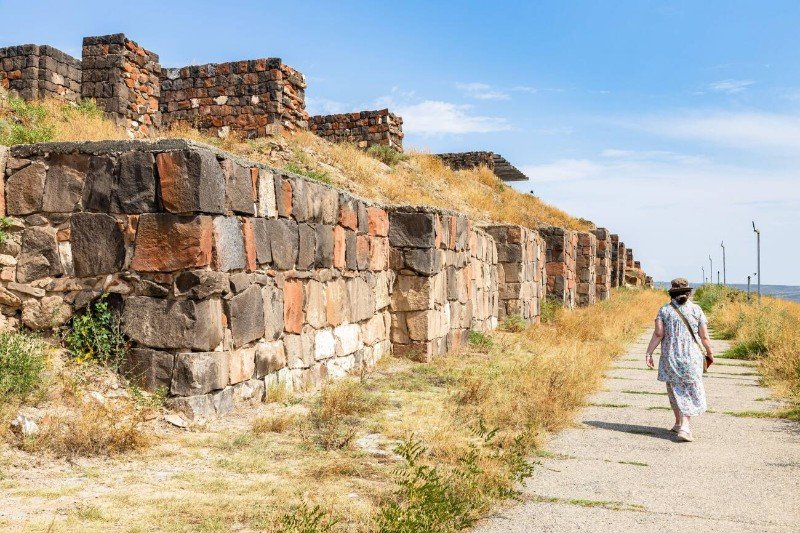
Travelers interested in ancient Armenian fortresses should plan carefully. Many sites sit in mountainous terrain, which requires preparation.
Here are a few useful tips:
Plan Transportation
Some fortresses lie far from major cities. Renting a car or joining a guided tour often makes travel easier.
Wear Proper Footwear
Most ruins require short hikes across uneven ground. Comfortable hiking shoes help prevent injuries.
Visit During Clear Weather
Clear skies provide better views and safer paths, especially for high-altitude sites such as Amberd.
Respect Historical Sites
Avoid climbing fragile walls or disturbing archaeological areas. Preservation helps protect these landmarks for future generations.
In the meantime, you can choose one of our Armenia tours to visit these ancient fortresses and experience Armenia’s rich history up close.
Conclusion
Ancient Armenian Fortresses reflect centuries of defense, leadership, and cultural development. From the Urartian stronghold of Erebuni to the medieval walls of Lori and Smbataberd, each fortress tells a unique story about Armenia’s past.
These five sites reveal how geography and architecture worked together to protect kingdoms and communities.
Travelers who visit these locations gain a deeper understanding of Armenia’s historical heritage and the strategic importance of fortified landscapes across the region.
Exploring these fortresses offers not only impressive views but also valuable insight into the enduring legacy of Armenia’s ancient civilizations.
FAQ
What is the oldest fortress in Armenia
Erebuni Fortress, founded in 782 BCE, is one of the oldest known fortresses in Armenia and is closely connected with the founding of Yerevan.
Which Armenian fortress is easiest to visit from Yerevan
Amberd Fortress is one of the most accessible sites from Yerevan. Travelers can reach it within about an hour by car.
Why were so many fortresses built in Armenia
Armenia’s location between major empires required strong defensive systems. As a result, rulers constructed many fortresses to protect cities, trade routes, and mountain passes.